
Roland DürreFriday March 15th, 2013
Chess & Management
When you have reached old age in the form of being more than 60, you will look back on your own life more and more often. And since I am rather happy with what I achieved and accomplished, I also once in a while think about the persons who helped me in life. Well, there are quite a few. Studying mathematics and computer science was certainly a good choice at the time. I learned a lot when I worked at Siemens. All through life, I kept meeting people who accompanied me for some of the way, thereby being a huge help. And it also seems that I married the right woman.
But some other things also helped a lot. For instance the fact that I learned accounting and business very early in life when attending the business-oriented Jacob Fugger Grammar School.
And something else, too, had a very beneficial effect on me: playing chess. It all started on those Sunday afternoons with my father. Even then, I had a lot of joy playing chess. But during the first few years of grammar school, when I started really getting into playing chess as a competitive sports in the club, my grades at school also quickly improved. Simply because chess had told me how to really concentrate.

But chess gave me a lot more than that. I would even go so far as to say I learned for life through playing chess. Difficult situations, both in private and business life, certainly have a lot of similarities with problems you face on the chess board. The problem solving strategies I learned while playing chess were useful for me in real life. Chess will help you to solve difficult problems “with intuition and strategy”.
 I also made many new friends while playing and competing in chess. Dijana Dengler and Stefan Kindermann are two examples for like-minded people. Both of them are also chess players, although considerably better than I. Dijana holds a diploma degree in economy and is FIDE champion. She already took part in many Olympic Games. She made chess her mission and is chief coach of the Münchner Schachstiftung. The Münchner Schachstiftung is very successful when it comes to re-socialization of extremely disadvantaged children. An experience Street Worker of Landeshauptstadt München confirmed that chess is often the only means by which these children and adolescents can be reached.
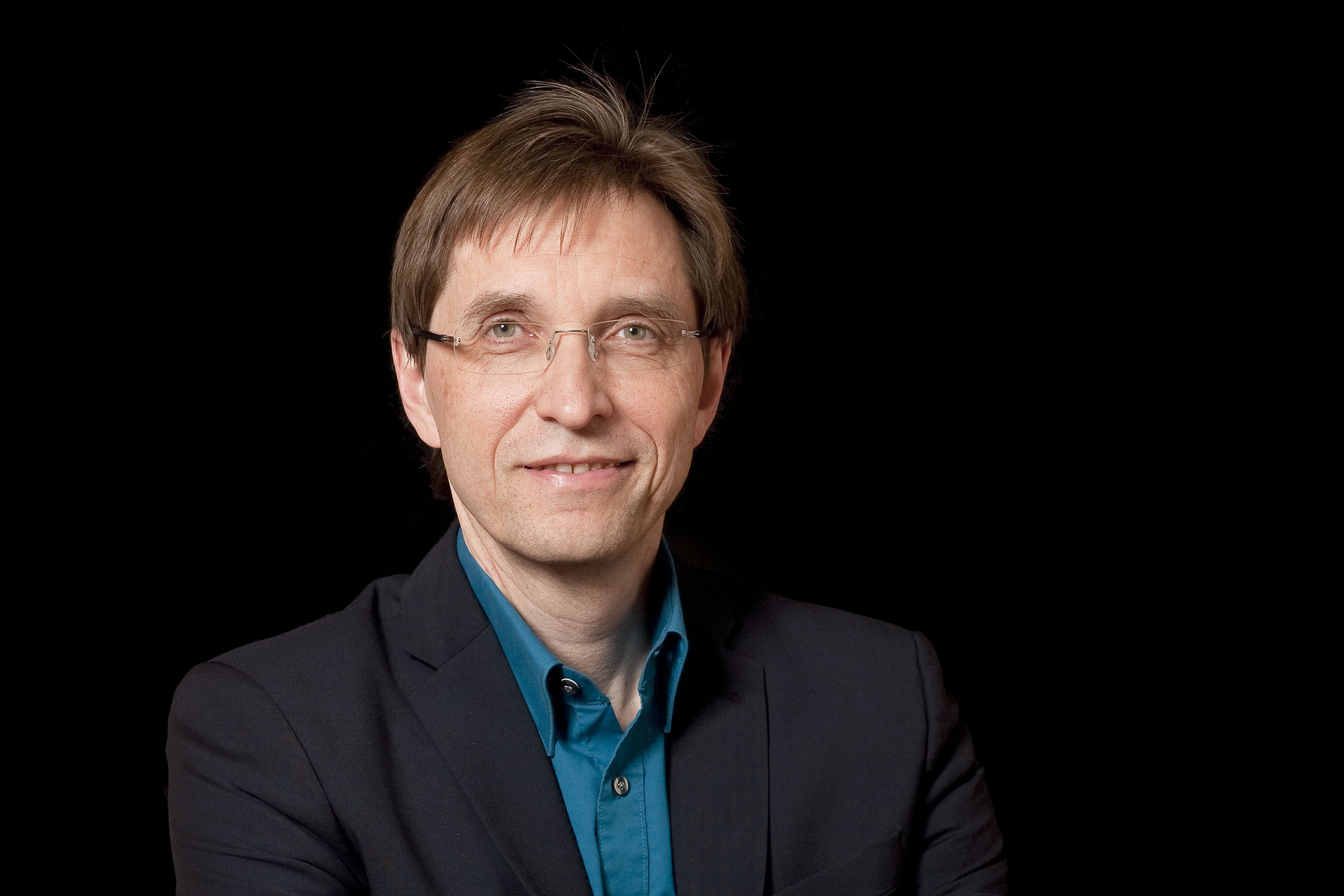 Stefan is Chess Grand Master and managing director of the Münchner Schachakademie. He, too, took part at Chess Olympics and even once qualified for the world championships. He works as a coach and psychological counsellor, as well as author of several books. Together with Professor Dr. Robert K. Freiherr von Weizsäcker and Dijana, Stefan developed the Master Plan. He coaches leaders in seminars and workshops in this discipline.
And this here is also about the Master Plan. Because it transfers the strategies of chess into real life. And it helps you to make “decisions” by a prudent change of perspective towards an advantageous combination of ratio and intuition.
 I keep experiencing how what I learned when playing chess also helps me in real life (both in private and business life, but they cannot be separated, anyway). It helps me to evaluate situations a little better. I find it easier to determine whether I am in a good or poor position. Based on this evaluation, I manage to come up with the right decision, instead of the wrong one, a little more often.
And I believe a small advantage like this can contribute hugely towards feeling well and having the chance to become a content person.
Since you can learn so much by playing chess, I am assuming that you can learn even more from the masters of this discipline. Consequently, I will go to an open seminar day “Master Plan” on Saturday, May, 11. The seminar is from 9:30 to 17:00 and the location is in central Munich, at Zweibrückenstraße 8. That is directly next to the Deutsches Museum.

I look forward to the seminar and, of course, also to all the people who will share the Mater Plan experience with me.
RMD
(Translated by EG)
P.S.
There is another seminar even earlier: on Friday, April, 26, 2013, at the same place. It costs € 580, including VAT. Meals for the day and a signed copy of the “Königsweg” are also included. For information on the Master Plan, click here Website. Registration: here.
Roland DürreThursday March 14th, 2013
Presentation by “(Fe)Male Students for (Fe)Male Students”
Since it is our upcoming event, here is the poster announcing the next IF Academy presentations. I am always happy to remind you of “upcoming events”:
Johannes Schmidt (TUM, IF-Lab/InterFace AG, Glassbox Games) will speak on Thursday, March, 21st, 2013, starting at 6 p.m. at the InterFace building in Unterhaching. His Topic
Get Under Way!
How video games and movement control want to get us away from being couch potatoes!

Of course, this invitation is not exclusively for f(e)male students. The event is free for all who want to come. After the event, we will again have a little “happy hour”.
For more information on the series of presentations by “(Fe)Male Computer Scientists for (Fe)Male Computer Scientists” click here. If you want to print the poster in high quality, just send an email to me – I will gladly send you the print PDF version.
RMD
Roland DürreFriday February 15th, 2013
Get In Shape! IF Academy – March, 21st, 2013
On March, 31st, 2013, Johannes Schmidt will be our speaker at the IF Academy. He studies Informatics at TU München, minoring in Medicine. “Additionally“, he also works at the InterFace AG IF lab.
 He has also several years of experience as an entrepreneur and started Glassbox Games with a group of friends. The young team programmed all kinds of smaller video games and Apps for various platforms.
In order to try and learn new things, Glassbox Games was founded by the same group. By now, Glassbox Games already won some smaller prizes and developed into a small enterprise. The goals have grown and now include serious entrepreneurial visions. And, of course, the Glassbox Games and InterFace AG are closely connected and on very friendly terms.
In his presentation, Johannes will focus on “movement control”. He will tell us about the historical development of this technology and show in a practical exercise how easily this technically really demanding topic can now be programmed.
Besides, he will introduce an IF lap project that reasonably integrates movement control. The presentation will conclude with a short outlook on what we might expect in this sector in the near future.
As always, the presentation will be held in our seminar zone. I strongly recommend it. Johannes will take us on a trip to a world that is alien to many of us, but it might suddenly become a very relevant part of ”common IT“. You really should have some basic understanding of it.…
We start at 6 p.m. – visitors are welcome from 5.30 p.m. After the presentation, there will again be a happy hour, called “beer and informatics”.
We look forward to welcoming many visitors from all age groups!

- Here is where Glassbox Games had their display in the Olympia-Halle when the Major League Volleyball match Generali Haching – Berlin Recycling was playing.
Of course, Glassbox Games also have their own Website and can be found on Facebook.
If you are interested in the tournament, click here.
RMD
(Translated by EG)
Roland DürreFriday January 25th, 2013
The Direct Path to Nerdism
This is about quality control for IT projects. You have to obtain certificates. Here is an original question you get preparatory for an exam.
“Quality management of a product consists of quality assurance, quality planning and quality control. You are responsible for quality assurance in an IT-based project. Name three central tools you need for quality assurance…”
If you can answer this and most other questions of the same sort correctly, you are a certified quality manager.
So what is left for me to say? It is better if I shut up. But your comments would be very much appreciated.
RMD
(Translated by EG)
P.S.
I discovered the topic in a Google+ discussion.
Roland DürreSunday January 20th, 2013
Knowledge From Articles – Knowledge From Experts
We live in the age of information inflation. Through twitter, FB, Google+ and other sources, I get many recommendations for articles and videos available on the internet. This is something I very much appreciate, because I often learn amazing things.
Some of the things I learn actually support my prejudices, other things I am skeptical about, not wanting to believe them.
But I do not know if everything I receive, read and hear in this flood of information is correct.
Consequently, I like seeking the opinion of experts. However, those experts must be people I know and believe to be able to judge. I must get the impression that the expert I trust also is in the habit of asking questions about things in private life and that he or she is an enlightened person. And I must be certain that I am dealing with an autonomous person with no tendency towards dogmatism.
After having built up trust towards such a person, I give this person more credit than some article I read. And I am glad if I discover that what he or she says matches what the articles says. Because it means that my source is a good one.
RMD
(Translated by EG)
Roland DürreWednesday January 16th, 2013
Knowledge and Humour for Computer Scientists
On January, 17th, 2013, the IF-Lab and IF Akademie at InterFace will start a new series of presentations (Vortragsreihe) at Unterhaching.
Thomas Baldus of IF Blueprint AG will be the first speaker at 6 p.m. (in the InterFace building, top floor, teaching area). He will speak about:
APPetite Whetted for Microsoft?!
How exactly does the new taste offensive look as it reaches our shores after its trans-Atlantic voyage?
For more information on the series of lectures, click here: IF-OPEN. Very important – this is not just about the lecture, but also very much about “meeting” during a presentation in the modern format with a “Happy Hour” after the event.
I look forward to a huge audience. Also, I am looking for speakers who would like to share their knowledge and fill the slots on other days. Here is our motto:
From practitioners for practitioners.
Or:
Informatics & Beer.

RMD
Roland DürreMonday December 31st, 2012
My Catholic Upbringing
It is one of the lessons I learned that the quiet days of Christmas and the New Year are quite suitable for re-evaluating your own life compass. Where am I heading towards? I tried again this year. Incidentally, however, there is no tomorrow without today and no today without yesterday. Consequently, my pondering led me back to my roots. This is about things that particularly moved me during my course of life. And I remembered times long past. Now, in order to put a lid on them as well, I will publicly describe those times. Maybe others who experienced similar things can benefit, too.
When I was eight years old, they prepared me for Holy Communion – also known as First Holy Communion (Erstkommunion). After a fairly normal catholic upbringing (not very intense, more sanctimonious), I – along with other Catholics in my class – was massively instructed during religious education lessons at primary school.
We were in the third form. After Christmas, the preparations for the momentous event got really under way. The first step towards First Holy Communion was to make us all extremely familiar with the martyrdom of Christ. I remember highly sadistic self-adhesive pictures. We had to buy them and then illustrate hand-written texts in our “Passion Exercise Book”.
After Easter, the “bootcamp” gained momentum. First came confession. We had to practice intensely for this. Confession would make us clean. Since confession makes us free from all sin, it must happen shortly before the First Holy Communion. For example on Saturday afternoon if you intend to take the Holy Communion on Sunday. And then you have to do everything in order to prevent sinning during the night from Saturday to Sunday – for example against pinching a bit or having unchaste thoughts (in fact, at the age of eight the latter was not yet a problem). We also practiced doing penance after the confession. You had to say the Pater Noster and the rosary slowly and humbly.
The re-education continued. After the confession came the Holy Communion. We learned that, for a good Catholic, it is the highlight of the week. Even if the week was really bad, it does not matter. Because we live for the Sunday, when the Lord comes to visit us. For an eight-year-old, there were quite hard weeks in 1958. Except that mostly Sundays were no better, either.
But this was not a problem, because, after all, we only had to suffer the misery of this earth until death would deliver us. And then we, as chosen Catholics, would get to heaven. To be sure, it was not easy, because the devil was after us pure souls everywhere. Always and everywhere, sin and atonement were present. So first and foremost, we had to get through. Which is why there was confession and Holy Communion.
Then we practiced Holy Communion. You were not allowed to eat breakfast before the Holy Communion. Mental purity and physical abstinence were absolutely indispensable requirements if you wanted to host the Lord.
He came in the form of an oblate, the Host. The pastor put it onto our tongue. That was also something we practiced. We had to let the body of the Lord melt in our moths, because “you cannot bite the body of the suffering Jesus with your teeth“ – said our religious instructions teacher.
Well, that is what it was like. Those were all things they pushed into our childish brains. For a certain span of time, they were even a success. Because when you are nine years old, you still believe what the grown-ups tell you.
Today, I am glad to have discovered shortly after my First Holy Communion that I cannot really find much use for the “punishing variant” of God. Neither did I, at the time, think of a ”loving one“. However, it did not take long for me to discover that God was easier to find between the massive trees that grew in the quiet of the Wittelsbacher City Park than in our Church of St. Antony. And my decision was made. When I had confirmation – that is the second certification a true Catholic has to suffer – I already was in a state of inner rebellion. I only suffered the ceremony under protest.
That is how I experienced it. Today, I wonder what would have become of me if I had ”purified myself“ every Saturday and then “received the body of the Lord” on Sunday. How would I then have been supposed to suffer life?
Consequently, I am very happy to have put a lid on my Catholic past when I entered puberty.
RMD
(Translated by EG)
Roland DürreFriday December 28th, 2012
It Could Have Come Straight From My Heart!
Again and again, I read wise books. There are many of them, and new ones appear all the time. And more often than not, I close them and put them away after only having read a few pages or chapters. Regardless of the fact that they actually sound quite interesting. Basically, it is because it always seems to me that they are not saying anything that is news to me.
Whenever I attend conferences, congresses or conservatively structured scientific events where knowledge is presented to me by way of speeches from the pulpit, I often get this uneasy feeling.
If then as terms like success, ethics, leadership, morals, planning, strategy, entrepreneurial culture, values, goals and goal-agreements, future,… become part of the presentation delivered with a huge amount of self-righteousness, I often wonder at all the things people know or profess to know. And then my stomach starts rumbling. Despite the fact that I, too, like talking about these topics. But I do it in the full knowledge that I, do not know the answers, either. Consequently I talk about these things because I want to motivate people to think about them. You could say I want to question other people’s – and my own – certainties.
Then I meet people who want to “profile” everyone and put everything, no matter if it is alive or dead, into “Balanced Scorecards”. And they speak about the “Human Capital” of an enterprise or a community. That gives me pause.
And whenever I sit in a circle with people who want to make all the difference, who approach the topic in a terribly modern and strategic way, who formulate huge goals, who dance from one utopian idea to the next and where “a mountain is in labor but all you get in the end is a small mouse” (“der Berg kreisst …”), then I feel really poorly. Those are the times when I think I really could have made better use of my precious time.
One evening, I was, again, discussing one of these topics from the world of economics with a very cherished female friend via email. Here is her reply:
… when all is said and done, we also miss the link to craftsmanship, apprenticeship, making, experimenting, piloting (this is where I see my personal interest), because basically economics are always some sort of mental game based on hypotheses, rather than a creative approach towards re-structuring the world. …
And suddenly I feel great. This is exactly what I want! So there are actually some people who are not only highly esteemed by me but also can spontaneously formulate well and in a concise way what I feel. Many thanks to my friend – whose name I will intentionally withhold.
To make up for it, I look forward to the next BarCamp – such as for instance the PM Camp. Because this is where you talk about your problems and ideas in a truly sincere way, where you exchange experiences and underlying ideas, share knowledge on a market place and acquire knowledge from practical applications for practical applications.
RMD
(Translated by EG)
Roland DürreTuesday December 4th, 2012
Here is Another Video Recording Showing Rupert Lay on Youtube: “Responsibility and Trust”
Yesterday evening, I uploaded another recording of a presentation by Rupert Lay to Youtube. Rupert Lay gave this presentation on May, 4th, 2003 at Bad Boll. It was about:
Responsibility and Trust
When responsibility and trust in an enterprise dwindle – reasons, consequences, what to do?
I was there when the presentation was originally held and would be happy if as many of you as possible would watch it.
Both presentations were given by Rupert Lay for the Ronneburger Kreis . The video recording is by Bernd Sielaff and Friedrich Lehn did the editing.
RMD
(Translated by EG)
Roland DürreThursday November 8th, 2012
German Essays
For me, the one subject at school that made me most miserable was German.
Basically, my self-assessment in German was not so bad. After all, my orthography was – in my opinion – a lot better than that of many classmates. And I also found that I could express what I wanted no worse than the average students in the class.
Except that, far too often, my ideas were the “wrong ideas”.
😉 At least that is what my German teachers thought.
The main problem was the German essay. Even the way our teachers set our tasks and the given titles were strange. Incidentally, I found it strange if a young and creative person was forced to write something under a special title. Isn’t that outrageous? I would have preferred to write my opinion on some topic or other and then creatively find a title that fits with what I wrote.
But no. Teachers asked 24 students to artificially generate essays on the same and often questionable and very unrealistic title, before marking them. Once in a while, we also had to write interpretations about texts that looked very alien to us – both by famous and less famous authors. However, we were not allowed to write down what moved us personally about a text or what we might have found disgusting. Instead, we had to write what the current doctrine said. Of course, that was not really what I felt most enthusiastic about.
In my opinion, the stories told by the great narrators were sometimes abominations. I can remember masterpieces by Kleist I really found sick. But at school, the great master was beyond all reproach in German lessons. And whenever I criticized about his writings what, to me, looked rather grotesque and stagy language, all I got in return was lack of understanding – with the consequence of being graded poorly.
It got even worse when the topic of a German essay had something to do with values, moral, ethics or the like. How often I realized that the German teacher had a value system that was totally different from my own! Differentiated, abstract terms had totally other meanings for the teacher (him) than for the student (me). When it came to judging what was “good” or “evil”, “right” or “wrong”, miles lay between our opinions.
And when finally the German essay was graded, the time had come for the concept of the teacher’s and the student’s world to clash. Sometimes it happened consciously – the teacher could not or was not willing to understand what he had read. Often, the rejection was subconscious, because the student’s ideas were so incompatible with the teacher’s concept of the world. If I was lucky, the teacher would shake his head in incomprehension when reading my work – before, from his point of view, tempering justice with mercy. All of this was not very beneficial for my grades in German.
Consequently, German became the one subject for me which is most suitable for outlining all the old-fashioned and outdated things about our school and learning processes. All we ever do is make students learn things without being convinced of them and then again forget them. You have to adapt to the teachers‘ prejudices and be prepared to make pre-fabricated opinions your own. But woe to him who shows civil courage or creativity, or – this is the worst case – both. As a general rule, this will be your downfall. And your grades in German will deteriorate. It is certainly a lot better to just keep quiet.
And here is another cheekiness: our German essays remained the property of the teacher or the school! At one time, I wanted to publish one of my essays in the school magazine. We are talking one of the essays that had been graded poorly. I got in real trouble for it.
Neither was I allowed to keep my masterpiece: the graduation essay in German. At the time, the best you could hope for was that you took legal action, which might have given you the right to see the corrected essay. A huge bureaucratic effort was necessary – and in the end it made not the slightest difference to the fact that my “intellectual property” had been confiscated by the Free State of Bavaria. And not just temporarily, either!
Well, so much on intellectual property.
RMD
(Translated by EG)


