
Roland DürreThursday July 11th, 2013
Parties, Pirates and Party Programmes – Help! (II)
It still annoys me that the pirates had to drown so unnecessarily. Let me try and explain it with the following example:
In the Pirates’ Wiki, you will find a Simple Manifesto.
On January, 21st, 2013, the document looked like this:
- We Pirates take the German Constitution very seriously and want everybody to strictly abide by it (that includes the judgements of the BVerfG).
- All power in the state comes from the people. We are talking our state where we elect representatives and which we finance. We want to be extra alert when it comes to looking what they do with our money.
- Representatives represent the entire population and have to answer only to their conscience.
- Digital technology and the internet have caused a massive cultural change. The only thing it can be compared to is the invention of the printing press. We want to accompany our country, our EU, our world on its way towards this change with a critical and creative eye.
- 0 and 1, along with all data composed with them, belong to the entire humanity.
- We want to make a secure existence and social participation legally possible for all people.
- We Pirates want a sustainable treatment of our environment.
- Drug Politics: the Pirates follow a drug prevention policy that is based on scientific facts.
Basically, all of this sounds quite well. And it is certainly a lot better than all those long-winded “programs” the other parties have written.
The sad news, however, is that until today (July, 11th, 2013) nothing whatsoever was modified in this text. Even though the author posted it on the Pirate Wiki for discussion. And even though modifications would have been highly advisable on all points…
Because if you read with a focus on precision, the formulations actually hurt. Regardless of the fact that quite a lot of good stuff could have come from them. In fact, you could have discussed every individual item and then developed a clear statement.
Here is an example:
Representatives represent the entire population and have to answer only to their conscience.
That sounds great – but it is a total catastrophe. Dialectically spoken, it is nonsense. How can a representative represent the entire population? And: not the people have to answer to their conscience, but their behaviour.
Now my criticism might sound extra pedantic to some. But that is not what it is. Because treating language with the highest possible diligence is a necessary requirement for finding a social consensus – i.e. god political work – in a morally acceptable way.
Stating that representatives are “answerable only to their conscience” makes it a lot worse. People like Hitler and Stalin followed their conscience when they committed all those atrocities. The terrorists who are such a threat to us follow their conscience when they commit their atrocities. A father who beats his child because he believes beating a child is necessary, even though it hurts him more than the child, follows his conscience. A mother who makes her children look small very often follows her conscience.
Consequently, all these people would be good representatives in this sense. After all, they followed their conscience. It is just tough luck that their conscience ignored the shared values of humanity.
I believe I can guess at what message the sentence is meant to convey and what the Pirates (or the one Pirate) wanted to say. Maybe you could say it as follows:
Representatives should follow their behaviourally motivated values autonomously and steadfastly! Because they are elected for what they said in this context. Consequently, they have to be autonomous and refuse squad belief. They must be immune to lobbyism and all kinds of temptations. And the values behind their behaviour must be compatible with the “social consensus” of all humanity.
This is how the Pirates might, for instance, have improved on their manifesto in every topic through an upright and domination-free discourse. And in doing so, they would have had a chance to rub against each other to their liking and goal-oriented while discussing not always trivial content. In this way, they could have found out what is right or wrong, good or bad.
What a great chance that would have been! But no – the Pirates followed the stupidity of other parties and gave themselves a program! And, of course, they get their reward – when it comes to election time. Because in our new world, emancipated citizens want values underlying your behaviour, along with people who remain true to their values. Instead of programs! Because nobody wants dogmatic programs (probably with good reason). After all, decisions will always depend on the context of the time. Consequently, it is unpredictable what future decisions will be right and good. How, then, is anybody supposed to write a reasonable program?
But you can get to the roots of your values and make them your behavioural maxime. And then you can ask questions about your own convictions. And I feel definitely more at home among people who try to gain insight in an ethical and enlightened way than among politicians who dogmatize through their own life program.
The Pirates have missed their historical chance. And, politically spoken, we regressed several decades and will have to start all over again. What a pity!
RMD
(Translated by EG)
Roland Dürre
Tweets on Twittering and Blogging #175
Here are my tweets of last week on:
Blogging and Twittering, Wisdoms and Rules:
130718 If something is rubbish, even paying nothing for it is paying too much – a rule also for twittering and blogging! #Twitter #Blogging #Wisdom
130719 If something is good, everybody will like it – also when twittering and blogging? #Twitter #Blogging #Wisdom
130720 If a deed is evil, it is not nice to talk about it, either – also true for blogging and twittering! #Twitter #Blogging #Wisdom
130721 Something that comes in quickly will also leave quickly – also true for blogging and twittering? #Twitter #Blogging #Wisdom
130722 Lovers like to tease each other – it also happens among twitterers and bloggers. #Twitter #Blogging #Wisdom
130723 If you want a solution without torment, first wait for things to ferment – also true for twittering and blogging! #Twitter #Blogging #Wisdom
130724 What good is a mirror for the blind? – not to forget, twitterers and bloggers! #Twitter #Blogging #Wisdom
There is a new tweet each day. See twitter.com and “follow” RolandDuerre!
Enjoy!
RMD
(Translated by EG)
P.S.
I took the proverbs from Alle deutsche Sprichwörter.
Roland DürreTuesday July 9th, 2013
Art and InterFace …
A software solution provided by InterFace was rather helpful for the media artist Wolf Nkole Helzle when he did his project “Homo universalis”. Wolf Helzle first tested said software during our technological IF Forum “Craftsmanship” on June, 13th. If you want to see the results, including a brief introduction, just click on Video. Now the software made its first big appearance in Münsingen. And our system worked just fine!
Here is the press release written by the artist after his project was finished:
P R E S S R E L E A S E
HOMO UNIVERSALIS – the face of the bio-spherical area is available!
Media artist Wolf Nkole Helzle used the portraits of 1,000 visitors for his project „Homo universalis“ during the INTERIM Biennale at the Altes Lager Münsingen.
The artistic event right in the middle of the bio-spherical area “Schwäbische Alb” lasted 16 days and the temporary studio of Wolf Nkole Helzle was open daily from 11.00 to 18.00 hours. Every evening, he did the computing with software specially designed for the purpose in order to find out what the current state of affairs with the portrait was.
Those 16 days were filled with exciting discussions about human nature between individuality and collectivism, between individual image and the total concept. There were many questions and assumptions about how the final picture was to be generated, about the prevailing significant characteristics, about the face and age of this bio-spherical creature, about the percentage of those wearing spectacles and why people were so open and friendly with him.
First and foremost, Helzle took individual photographic portraits of 1,000 visitors. They were all directly printed. After having been signed and numbered, the portraits were given to the persons shown on the pictures. They were of all age groups. Copies of all photos were also pinned to the wall of the interim studio, which filled up as time went by, giving an overview both of the visitors and the parties involved with the final portrait at equal parts.
The software specially designed for this project by InterFace AG of Unterhaching near Munich will now make it possible for the internationally active artist to unite entire regions with hundreds or thousands of persons in one face.
You can buy the face of the bio-spherical area in various formats (www.helzle.com).
Münsingen, July, 8th, 2013
Social Media Art Wolf Nkole Helzle
Schloßberg 1 D-72525 Münsingen
fon_+49 7384 959 72 89
mobil_+49 170-188 71 40
mail@helzle.com
www.helzle.com
www.interactive-image.org

On this picture, you see the installation of the Homo universalis in building BT23 of the Altes Lager with the individual portraits and projected final portrait (photo by Luca Siermann)

Helzle´s interim studio during the Biennale (photo by Claudio Hils)

“Homo universalis – we give a face to the bio-spherical area”
by Wolf Nkole Helzle, 2013
RMD
Roland DürreSunday July 7th, 2013
(Deutsch) Industrie 4.0
Roland DürreSaturday July 6th, 2013
If You Do Not Cooperate, You Will Be Given Notice. Is that Easier Said than Done?
Here is another one of those dialogues that made me thoughtful… And, again, Stefan created waves by throwing a pebble into the water. Said waves eventually also reached me, which caused this dialogue and article. It all started with:
Everything is dependent on cooperation: how to organize cooperation! › Hagen Management GmbH, Dornbirn
(Auf die Kooperation kommt es an: Zusammenarbeit organisieren! › Hagen Management GmbH, Dornbirn)
Stefan wrote:
In his latest book “leading radically”, top author Reinhard K. Sprenger says that leaders should use all means to make sure the “cooperation priority” is realized. …
(maybe you want to read the entire article?).
I replied – perhaps a little rashly:
If someone formulates an ultimatum “if you do not cooperate, you will be given notice”, then this virtually tells you he is unfit to do the job …
You could just as well write: “we know what is right and what is wrong and those who cannot agree will be given notice!”
And that is when you can kiss civil courage good-bye!
Of course, Stefan replied:
To be sure, the sentence is provocatively formulated. In order to avoid misunderstandings, however, let me add a few ideas:
a) It does NOT mean that we need people who say “yes” to everything in an organization.
b) Instead, it means that we need a constructive argumentative culture in organizations.
c) It does NOT mean that controversial opinions will be fought against.
d) Instead, it means that people who are apparently neither capable nor willing to cooperate have no business remaining in an organization.
After all, if you are a radical solo-player, you are welcome to practice your potential as an individual entrepreneur. On the other hand, organizations depend on competent persons who are willing to learn and to offer their competence in the interest of a common cause. This is the only way how TEAM work can succeed. And that is actually what matters, both now and in the future.
Roland, do you disagree? If so, then I am very much looking forward to your next comment …
Of course, I did not disagree. But still, I had to reply:
Hi Stefan, I totally agree with what you said in a) to d). The same is true for the rest. I am certainly one of the people who acted rigorously in these kinds of situations by removing people from a team or giving them notice. Some of my decisions in this context were definitely “isolated” and not at all easy. And – luckily mostly only initially – these decisions also caused irritations and were met with little understanding, even among the other team members.
However, I also had or saw negative developments in teams. Consequently, my worries are situated in the border area which probably will always exist when you have lateral thinkers and “people who object”.
Ironically, it only got clear to me through the conservative politician Klaus Töpfer how important the community of “people who object” and the “culture of objection” are! Personally, I was far too quick to condemn all those people who opposed or actively fought against windmills or electricity grids. Basically, I always assumed they were acting according to the Saint-Florian principle (dear saint, spare my house, ignite that of someone else).
Now, however, I think I understand the huge if not irreplaceable value this “culture of opposition” and particularly the lateral thinkers can have.
One of the reasons is that there will always be a latent tendency of organizations and systems towards fascist structures. And it happened frequently that those who “objected” and were lateral thinkers were quickly defamed as being those who – as you yourself write – were “apparently not capable or willing to cooperate” and were “not pulling at the same string”, thus jeopardizing the great national (or entrepreneurial) goal.
As I see it, the danger to fall victim to this is particularly strong if you work with great enthusiasm for something you personally consider extremely important and can also easily justify, which makes it look totally legitimate. I very much appreciate it if someone is enthusiastic in everything he or she does. But it opens the path towards getting angry with inconvenient disturbances, which will make you irrational and you might start defaming others.
Conclusion:
Basically, I wholeheartedly back the demand you formulated; the only reservations I have are that one should be aware of the ever-present danger of a creeping appearance of – well, I will write the evil word: – fascist tendencies in organizations/social systems. Using that concept, even “good” people who disagree and lateral thinkers can be silenced in the interest of “the higher goal” or even “the bigger interest”. And I recommend that declarations using these kinds of terms should always be questioned with an extra critical eye …
When all is said and done, it is probably always a question of who decides what exactly our “shared, higher goals” are. And this is when, as I see it, even good democratic structures fall far short.
Perhaps this is the problem with trying to find the synthesis between individuality and collectivism we as humans are constantly facing.
Sorry for my long answer …
Here is something to make you smile:
When I was young, I frequently heard:
“If you do not like it here, why don’t you go and live in the Soviet Zone?”
And in retrospect, I have to say that exactly the things I and my friends found disagreeable at the time are those things that make me realize today that we were absolutely correct in disagreeing.
“You had to wait a mere half century, and already you can see the consequences …”
Since the topic will not let me rest.
Here are a few more ideas!
Probably the weak link is the “collective goal”. For me, team work has a very positive connotation. I like working in a team and I believe it matches our needs. We humans are social creatures. And in order to have “good team work”, you doubtless sometimes have to decide and realize “hard steps”.
Still, the “collective higher goal” remains a problem. If we are talking a good goal, there are basically no objections. But what happens if the goal turns into an end in itself? Or if it gets so important that all means seem to justify the end? Or if a good goal suddenly turns into a bad goal, for whatever reason?
A “healthy goal” can also become an “unhealthy goal” without itself undergoing change. Just because the entire world undergoes a change (in values) or because the frame conditions are differently perceived.
And if then the team is “trained too well”, the “inner immune system” – which might have functioned if precisely those “scaremongers and defeatists” were still on board – can be missing.
Because then the team “crowd” will have to save the situation – and woe if now the “evil ones” are absent.
Maybe I will try and dedicate an entire article or a barcamp session to this topic. Regardless of the fact that I failed with these kinds of ideas in discussions with certainly very wise and good persons in the past. I remember my comment against a strongly goal-oriented project organisation free from a strong and critical reflection of the project goal that from my point of view seemed harmless but very important causing dismay in my discussion partner. Eventually, it led to him believing I was personally accusing him of something nasty.
Basically, I was just trying to make it clear that collective goals might easily turn foul. And I mean in little slices and in a way that makes it hard (or impossible) for the “agents” to realize what is happening. And if such a situation arises and you removed the (perhaps only so-called) “consequent lone warriors” before, keeping only the perhaps equally so-called “competent persons who are willing to learn and prepared to dedicate their competence to a shared and higher goal”, then it might happen that the inner immune system of such a team against abusive requirements or even fascist developments weakens.
So:
I believe that the pariahs of a team as described above might well be quite important for the team, even if they are perceived as “a-social stinky sourpusses” who are nothing but a burden to the team.
But perhaps I am suffering from some paranoia when it comes to over-harmonious teams and fascist systems because inside me, the individualist part is very scared of the collective force.
But this would lead towards the topic “healthy autonomy”, which is an extra chapter. Well, all those were my complex reasons for criticizing a basically totally correct idea.
RMD
(Translated by EG)
Roland Dürre
2nd IF FORUM 2013: “Jean Paul & Hypertext”
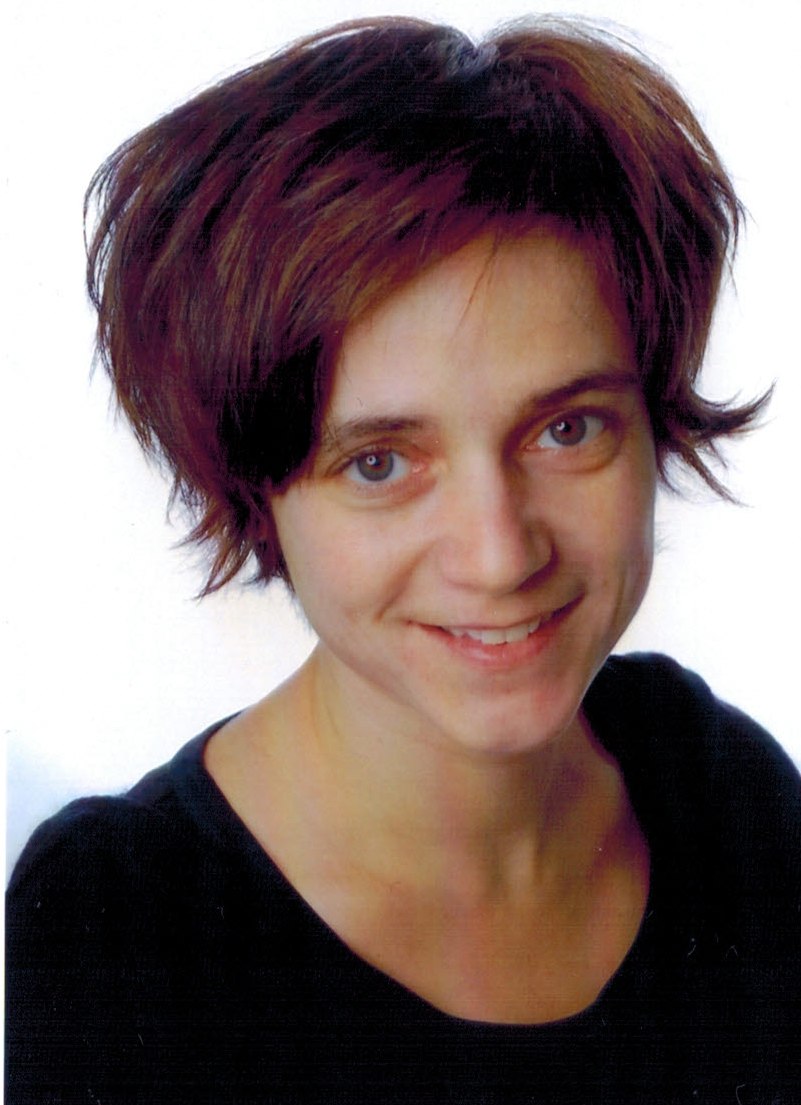 Frau Dr. Annina KlappertFrau Dr. Annina Klappert
is our speaker at the second IF Forum of 2013. She will tell us about:
Jean Paul and Hypertext
On July, 11th, 2013, she will give an entire IF Forum presentation at our Unterhaching InterFace building.
Here is a short outline:
During the 20ieth century, the data volume kept increasing – and along with it the problem of data access.
Well, considering when he lived, Jean Paul actually was quite a “professional” when it came to collecting data. Also, he was already confronted with the same problems, though on his own scale. Using his special excerpt technology, he not only collected knowledge, but also linked it in an intelligent way.
So we can actually ask today as Jean Paul asked then: how can data be stored and linked?
And how can we acquire new knowledge from those data?
A short glimpse at the aesthetics of Jean Paul can show us his concept of wit and also teach us possible linking technologies. On the whole, the method of writing as theoretically overloaded in Jean Paul’s ‘pre-school of aesthetics’ and practiced in his poetic works can show us why today’s hypertext systems are so helpful, how they function in their structuring of knowledge and what are their challenges.
About the speaker:
Frau Dr. Annina Klappert wrote her dissertational thesis at Bonn University on: “Die Perspektiven von Link und Lücke. Sichtweisen auf Jean Pauls Texte und Hypertexte” – The Perspectives of Link and Gap. Views on Jean Paul’s Texts and Hypertexts. Between 1999 and 2004, she worked at the Köln Forschungskolleg SFB/FK 427 “Medien und kulturelle Kommunikation”.
Frau Klappert is currently an employee at the chair of General and Comparative Literature at Erfurt University. Her interests and special fields of research are: virtual theories, hypertext theories, slip boxes as knowledge technology and digital practice, as well as modern literature.
Registration:
The If Forum will take place at our Unterhaching headquarter building in the seminar zone on the top floor. We start at 18.00 hours. We look forward to welcoming our guests! As always, you can register for the IF Forum by sending an E-Mail.
Here is an overview of the three “Jean Paul presentations” of the year 2013.
A Visit to the Present
Jean Paul presentations at the IF Forum
In 2013, our IF Forum will be about how modern Jean Paul’s topics and ideas actually are.
With presentations on entrepreneurship, hypertext, wit and new media, we want to project new perspectives and questions to the Here and Now. Why don’t you join us?
Jean Paul the entrepreneur
Jean Paul was one of the first German authors who actually made a living out of his writing. Mind you, he did so regardless of a start under very difficult circumstances. He visited the intellectual centres of his time: Leipzig, Weimar, Berlin – and his books were a success to make Goethe envious. When Jean Paul married, even the Prussian Queen invited him for tea and gave him a silver tea set.
Jean Paul did not owe his ascent and success to accident, but to careful planning with entrepreneurial instinct. Even when times turned bad and the Napoleonic wars devastated half of Europe, he still was able to maintain his position. The way Jean Paul combined success and sustainability looks still remarkably modern today. .
Our speaker Bernhard Echte, scientific literature expert, exhibition organizer and publicist, worked many years as director of the Zürich Robert Walser archive. Today, the entrepreneur has his own publishing company: “Nimbus, Kunst und Bücher”.
The presentation will be on: April, 11th, 2013 (Thursday) | Starting at: 18.00 Hours | At InterFace AG, Unterhaching
Jean Paul and Hypertext
Even before he called himself Jean Paul, young Johann Richter read everything he could lay hands on: hardly any of the books actually belonged to him. Whatever he read, he excerpted in notebooks. In those same notebooks, he also commented ideas currently coursing through his head. Jean Paul added catch phrases to his entries, now called tags. In this way, he created a huge private encyclopedia. It was structured like a modern database and was the foundation of his literary work. Only through his database, Jean Paul was able to realize his unique style. A style that is at the same time erratic and precise. He managed to turn the financial misery of his youth into a virtue the result of which surprises us to this day.
Our speaker Annina Klappert, is a scientist at the seminar for General and Comparative Literature at Erfurt University. Her dissertational thesis is a structural comparison of Jean Paul’s texts and hypertexts. Her scientific research is mainly concerned with media, references and virtual reality.
The presentation will be on: July, 11th, 2013 (Thursday) | Starting at: 18.00 Hours | At InterFace AG, Unterhaching
Jean Paul, wit, post-modernism and the new media
He was a “God-Denier” and an “intellectual disintegrator”, a fervent cosmopolitan, sceptic and joker. His educational theory “Levana” is highly praised, since it advertises wit and irony against the strict no-nonsense attitude of Fichte’s oratory as the basis of a healthy personality. In his policy of “the third person between Germandom and Bonapartism”, you can anticipate the post-modern indecision between the opposing poles of “the truth”. With his aesthetics of straying, he already uses the interruptive and jumpy hypertext aesthetics of the internet. Who was this man who hardly ever left home and still intellectually and mentally was way ahead of his contemporaries?
Our speaker Roberto Simanowski is professor for media sciences at Basel University. He is concerned with the changes in writing caused by the digital era and publishes the online journal dichtung-digital – journal for digital aesthetics.
The presentation will be on November, 7th, 2013 (Thursday) | Starting at 18.00 Hours | At InterFace AG, Unterhaching
RMD
(Translated by EG)
Roland DürreThursday July 4th, 2013
My Agile Manifesto …
🙂 … it might look like this or similar:
The more I think about “acting and behaving in an agile way”, the more I believe it to be a basic principle that makes the difference between the “old world” and the “new world”.
Consequently, “AGILE” might well be the next logical step after “enlightenment” and “using your brains”. Being AGILE also means you have to move consciously all the time between the two opposing ends individuality (what do I want, what can I do, what am I permitted to do,…) and the collective (what do we want, what can we achieve, what are we allowed to do,…).
“AGILE” describes our wish to live our lives in freedom – which, at this place, means “being prepared and capable of living your life in responsibility”. At the same time, you have to follow the principle “promote your own and the life of others, rather than reducing them”.
Being “AGILE” means knowing how to deal with responsibility. Being in favour of what change we need and opposed to what change is detrimental for us.
Being “AGILE” also includes the wish to increase your knowledge and then being able to apply them. Naturally, models and approaches, methods and concepts are an important result of additional knowledge. …
Consequently, in order to become “AGILE”, we will constantly have to learn new things, do things we are not used to, try strange things and collect experience. We have to understand and comprehend how processes in our social systems function. Thus, the “integrative and systemic understanding” of our enterprises will become the requirement for successful “leadership”.
This is it for now in a nutshell …
I was motivated to write this outpouring on agility by an article in openPM by Stefan Hagen.
RMD
(Translated by EG)
Roland Dürre
Tweets on Twittering and Blogging #174
Here are my tweets of last week on:
Blogging and Twittering, Wisdoms and Rules:
130711 If something grows roots, it means to stay – also a rule for twittering and blogging? #Twitter #Blogging #Wisdom
130712 Things will not get better if you laugh at them – also true for twittering and blogging! #Twitter #Blogging #Wisdom
130713 If you wish for something, you want to believe it – also true for blogging and twittering! #Twitter #Blogging #Wisdom
130714 If something does not belong to you, let it lie – also if you are a blogger and twitterer? #Twitter #Blogging #Wisdom
130715 Never say die – not to forget, twitterers and bloggers. #Twitter #Blogging #Wisdom
130716 Something that does not come from the heart will not go to the heart – also true for twittering and blogging! #Twitter #Blogging #Wisdom
130717 If something was not made for cutting, no amount of whetting will make it sharp – careful, twitterers and bloggers. #Twitter #Blogging #Wisdom
There is a new tweet each day. See twitter.com and “follow” RolandDuerre!
Enjoy!
RMD
(Translated by EG)
P.S.
I took the proverbs from Alle deutsche Sprichwörter.
Roland DürreMonday July 1st, 2013
Managing Knowledge Transfer Successfully!
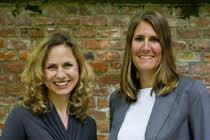
I enjoy cooperating with the “wissenswerk” – which was founded by Kristin Block and Judith Lell. Now they designed a totally new seminar with totally modern content and approaches on “knowledge transfer”. The first time this seminar is held will be on August, 20th and 21st, 2013 at Frankfurt/Main!
Here is a short paragraph from their announcement.
 Knowledge is fuel that pushes enterprises to the top!
Knowledge management will give you the necessary conditions for a functioning creation of value. When all is said and done, your enterprise will become unique through knowledge paired with competence, behavioural efficiency and innovative power. In modern times, knowledge gets both more and more complex, whereas its half-value period gets smaller.
Time limits for projects in ever-changing teams and the ever shorter time employees remain in the enterprise, too, are a challenge when it comes to finding, preserving and improving knowledge. Consequently, it is necessary to install a goal-oriented knowledge transfer in the enterprise. This process of sharing knowledge will not happen by itself. Instead, you need know-how, as well as the active design and control by the management.
The seminar will link innovative methods of knowledge management with new insights from neuro-science. In this way, you will get a better understanding of processes and can optimize knowledge flow in your enterprise.
Feel free to just download the Flyer “knowledge stransfer” (3) . It tells you all you need to know about the event.
.
RMD
(Translated by EG9


